My First Botswana Disaster (I Mean, Adventure)
In 2008, a friend casually asked if we'd like to join a tour to Botswana. "Casually" — as if he'd asked us to pop round for a braai, not venture into one of Africa's great wildernesses. We'd done Namibia. We'd done "local." Botswana? That was for other people. Braver people. People who owned more jerry cans.We said yes. Hesitantly. Like someone agreeing to a bungee jump while quietly hoping it gets cancelled. So off we went — four vehicles, four very different humans. There was the Architect (previously toured Botswana, dangerously confident), the Oil Dealer (veteran of the Kalahari 1000km Rally, so basically a maniac), the Farmer from the Blue Bulls country up in what used to be Northern Transvaal (well-travelled cattle grader, man of the land), and then... us. The semi-government clerk and his wife. Wide-eyed, hopeful, absolutely clueless.We crossed the border at McCarthy's Rest and entered a new world. A very sandy new world.
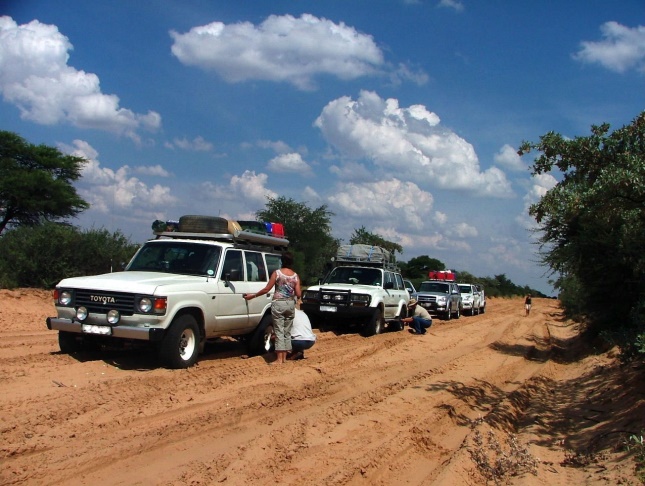
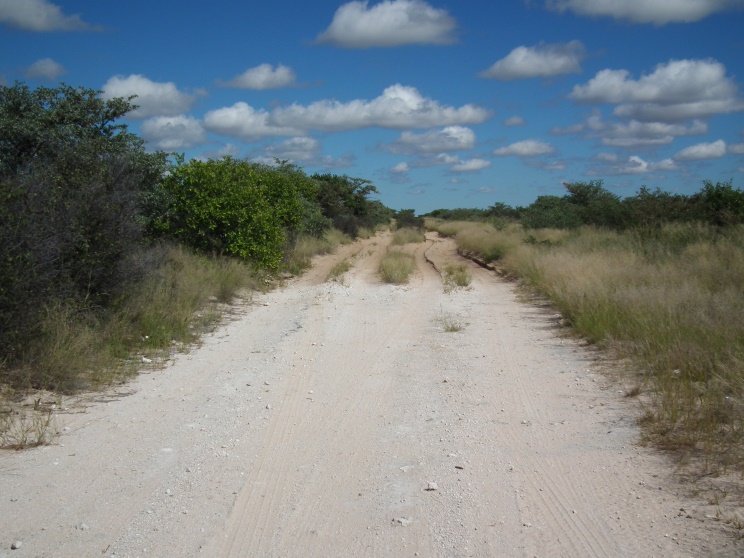
The road to Mabuasehube started out as a perfectly respectable gravel road and then, somewhere along the way, quietly gave up and became three parallel sand tracks. You could choose whichever one looked best — which, of course, was always the one you weren't on. A bit like a checkout queue at Checkers.The sand was thick. Magnificently, stubbornly, soul-crushingly thick. We stopped twice to let air out of the tyres and approximately forty-seven times to question our life choices.
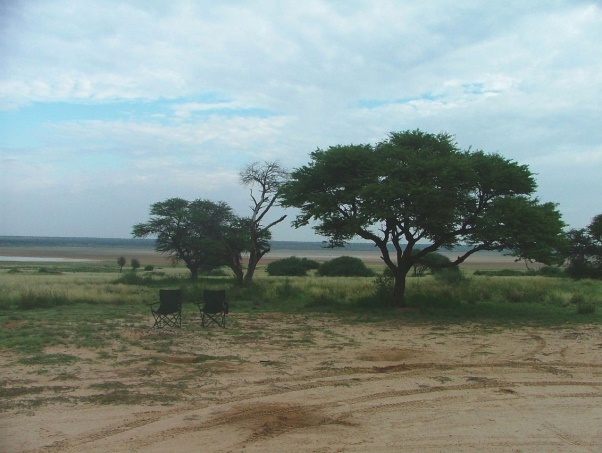
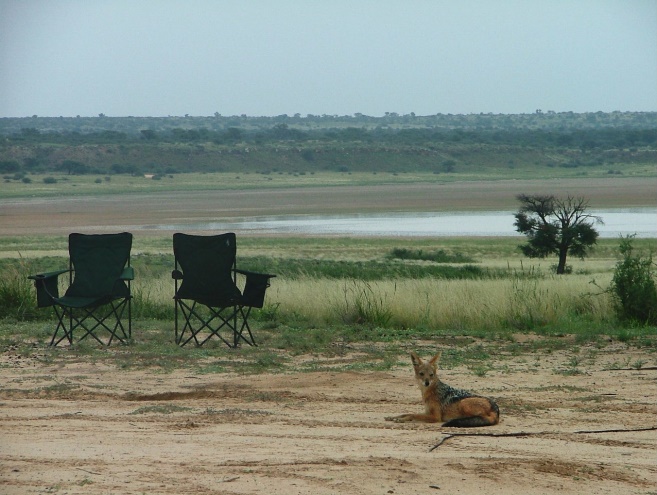
We made it to campsite Mabua No. 4, overlooking a vast pan, with a waterhole in the south corner doing brisk business with the local wildlife. Everyone cheerfully pitched their tents.Now here's a thing they don't put in the brochures: there are no fences. No walls. No electrified perimeter. Nothing between you and whatever large, toothy thing happens to be wandering past at 2am. Apparently this is considered part of the charm.We had been warned that carnivores had been known to stroll through these campsites.
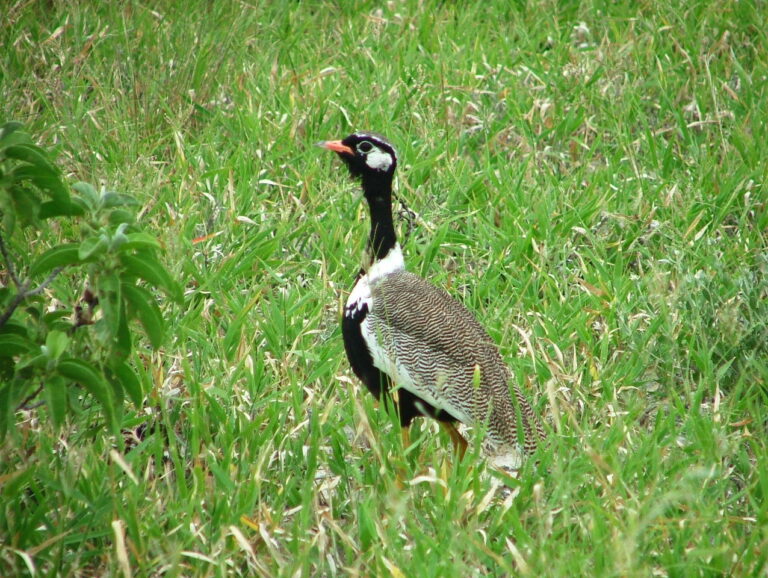
Fortunately for us, the lions and hyenas apparently had better things to do. We were visited instead by jackals, guineafowl, francolins, and hornbills — all of whom had clearly read the menu and determined that our leftovers were worth investigating. Fair enough.Every single morning, just after 5am, a korhaan screamed us awake. Every. Single. Morning. No snooze button on a korhaan, I'm afraid.
After Mabuasehube, we headed north through Hukuntsi, refuelled, and eventually hit tar road toward Ghanzi. The next day, we turned off toward the Central Kalahari. We'd been warned the road was dreadful. It turned out to be wide, hard, and perfectly pleasant — all the way to a small town called New Xade, where the GPS cheerfully instructed us to turn onto a track that appeared to be made entirely of beach sand.There was some disbelief in the convoy. We had just driven hundreds of kilometres of excellent road to arrive at... this?A woman in New Xade tried to sell us a live chicken. In retrospect, we probably should have bought it.
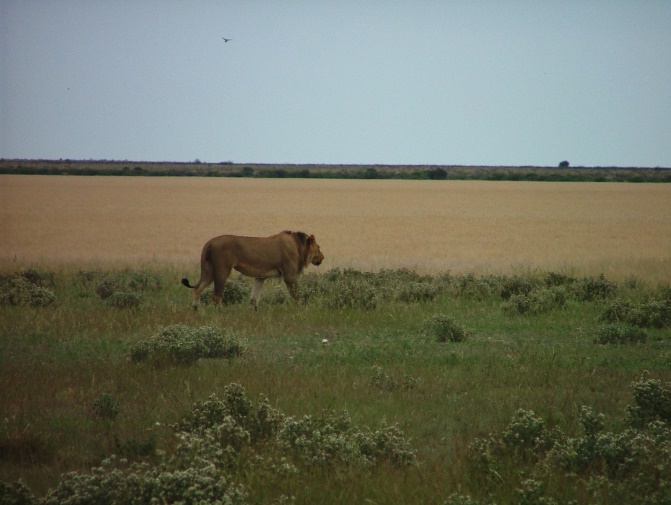
At Xade gate, the farmer's trailer decided it had also had enough and attempted to depart from its own A-frame. We addressed this with what would become the tour's signature repair technique: a lot of wire. Problem solved. We moved on.Then came Piper Pan. In the early hours of one morning, we heard a lion roaring somewhere out in the darkness. Like any sensible people, we immediately leapt out of bed, made coffee, grabbed binoculars, and drove straight toward the sound.At sunrise, we found him. Or rather — we thought we found him. Across the pan was a shape. An anthill? A lion? An anthill? A lion? We went back and forth for several minutes, binoculars raised, dignity lowering, until the anthill stood up and roared.Lion. Definitely a lion.Just then, a rental 4x4 crept up beside us, its rooftop tent flapping off the side like a deflated birthday balloon. European tourists. Slightly hollow-eyed. Turns out the lion had spent the entire night in their camp. They hadn't slept a wink. Being good citizens of the African bush, we stayed with them until they'd packed everything up — because when a man's tent has just hosted a lion, the least you can do is finish your coffee nearby.
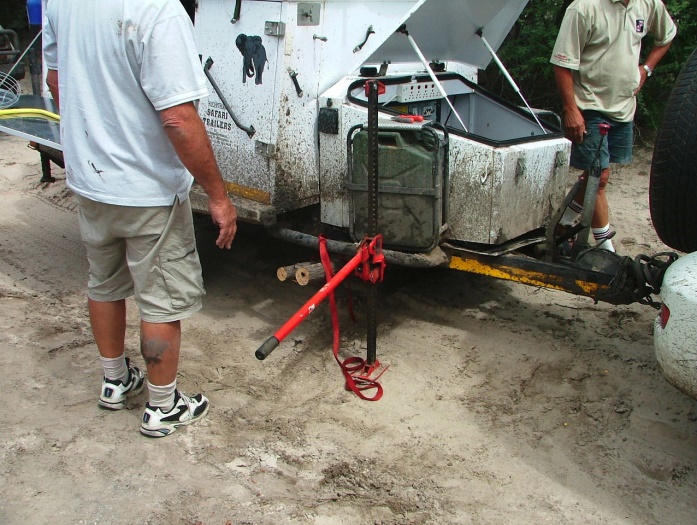
The trailer continued its campaign of mechanical sabotage. On the way to Nxai Pan, the A-frame broke entirely. This time we sacrificed a Mopani tree stump, more wire was deployed, and off we went again. By the time we reached Rakops, the farmer had had quite enough of his trailer's personality. He said his goodbyes and turned back for South Africa to sort it out, which honestly seemed like the most sensible decision anyone had made all trip.
Our final adventure was the attempted visit to Kubu Island. We had been warned — repeatedly — about the mud. We turned off the tar, hit a track, which became a waterway, which became a muddy channel of increasingly ambitious proportions. We dug. We churned. We reassessed our choices as a group. We turned around and slid back to solid ground. And then, with the wisdom of people who have had quite enough, we pointed the vehicles south and went home.
What I learned: Going somewhere for the first time makes you a pioneer — even if a thousand people have been there before you. You don't need a big group. You don't need to pack as if civilisation ends at the border. And sometimes, the anthill really is a lion.
Happy travelling. — Peter Rau